Summer Gutter Cleaning in Fruitland Park FL: Why Debris Removal Matters
@homeexteriorguide051
Summer in Fruitland Park has a way of exposing every weak point in a gutter system. A dry stretch can make everything look fine from the ground, then one hard afternoon storm rolls through and suddenly water is spilling over the front edge, pouring by the entry, and splashing mud onto the siding. The problem often is not the rain itself. It is the layer of debris that built up quietly over weeks and months, then turned a simple drainage path into a blockage.
That pattern is familiar across Central and North Florida. Summer brings heavy rains, high humidity, and the start of tropical storm season. University guidance for Florida storm prep specifically recommends clearing needles, leaves, and other debris from roofs and gutters because gutters and storm drains can clog during this time. That advice sounds basic, but it carries a lot of weight in places like Fruitland Park, where one neglected gutter line can go from mildly dirty to completely overwhelmed in a single weather event.
Homeowners sometimes think of gutter cleaning as cosmetic maintenance, something you do when the house starts looking a little rough. In reality, summer gutter cleaning is about water control. It is about keeping runoff moving where it is supposed to move, instead of letting it back up, spill over, or carry organic debris into places it should not go.
Why summer is the pressure test
In Florida, summer is not a gentle season for exterior systems. Roofs bake in the heat, fasteners and connections stay exposed to humidity, and then intense rain tests every slope and outlet. Even a gutter that handled spring showers without complaint can struggle once summer downpours become regular.
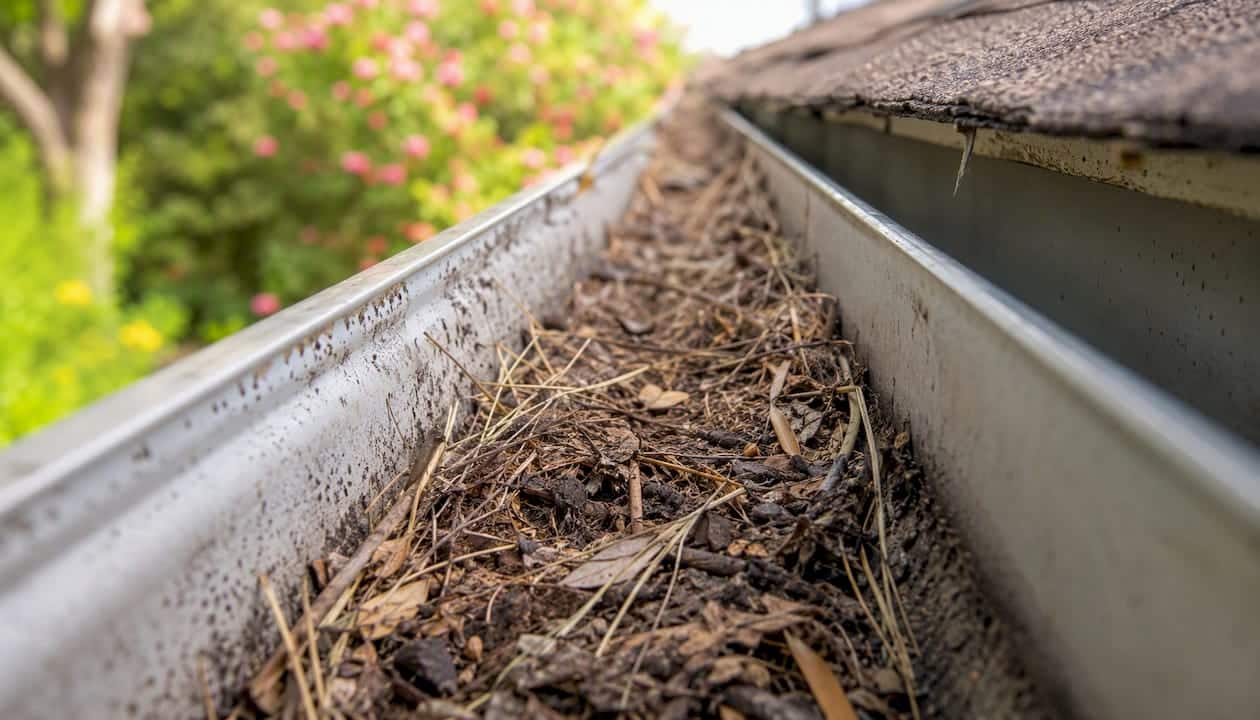
That matters because gutters are only as effective as their open path to the downspouts. Leaves, pine needles, oak debris, and damp organic buildup do not need to completely fill a gutter to create trouble. A partial obstruction near an outlet can slow water enough that the whole run starts holding more than it should. Once that happens, overflow becomes more likely, especially during the kind of sudden storm common in this region.
Florida maintenance guidance for stormwater systems also points to the need to clean gutters and downspouts as needed and remove organic buildup, especially in summer. That seasonal emphasis lines up with what many homeowners see on their own houses. Summer is when minor neglect stops being minor.
The debris problem is more local than people realize
Not all gutter debris behaves the same way. In this part of Florida, pine needles and oak leaves are a stubborn combination. Pine needles tend to mat together, especially when wet, and they can bridge across outlets or catch finer material behind them. Oak leaves and acorns add bulk. The result is not just a loose pile of dry litter you can blow away. It is often a damp, compacted mass that holds moisture and resists flow.
UF/IFAS guidance also notes that leaf litter and yard debris should be kept out of gutters and storm drains because runoff can move that material into waterways. Live oak leaves and acorns are a documented source of stormwater nutrient pollution in Florida. That is an important point that gets missed in everyday maintenance conversations. Cleaning gutters is not only about protecting the house. It also helps prevent organic debris from washing into the broader drainage system.
There is a practical upside here too. Florida guidance mentions using fallen leaves and pine needles on site as mulch rather than letting them wash away. For homeowners with landscaped beds, that can be a sensible way to handle what discover more comes out of the gutters, as long as the material is clean and used appropriately on the property.
What clogged gutters look like before they fully fail
The clearest warning sign is overflow during a rainstorm, but you usually get earlier clues if you know what to watch for. A gutter does not have to be hanging off the house to tell you it needs attention.
Here are a few signs that summer cleaning should move up your list:
- Water spilling over the front edge during a storm
- Pine needles or leaves visibly packed near a downspout opening
- Damp, dark organic buildup sitting in the gutter channel
- Debris collecting where the downspout discharges
- Soil splash or washout below roof edges after rain
Those signs do not automatically mean you need new gutters. Sometimes they simply mean the system cannot do its job because the path is blocked. Other times they point to a larger issue with slope, fastening, or drainage layout. The point is that summer gives you real-time feedback. If the system struggles now, it is worth addressing before a stronger storm arrives.
Debris removal is about more than the gutter trough
When homeowners say they had the gutters cleaned, they often mean someone scooped the visible debris out of the horizontal runs. That is helpful, but it is not always enough. Water still has to move through every downspout and out to a discharge point that can handle it.
A downspout can look fine from outside and still be restricted inside by packed organic matter. That is why downspout drainage matters just as much as the open gutter channel. If you have ever searched for terms like downspout drainage Newberry FL, you have probably already run into this issue in one form or another. The concern is not only whether water enters the downspout. It is whether it exits freely and away from the house in a controlled way.
This is also where summer storms become unforgiving. In a light rain, a partially clogged outlet may limp along. In a heavy rain, the same outlet becomes a choke point. Water backs up behind it, and the entire system starts acting undersized even if the gutter dimensions are technically adequate.
Gutter size matters, but clean flow matters first
Homeowners often ask about gutter sizes for Florida homes, and it is a fair question. Florida building requirements state that gutters and downspouts must be sized and discharged in accordance with the applicable code, and exterior gutters and leaders should be made of metal or approved plastic and securely fastened with corrosion-resistant fasteners. In practice, that means sizing and installation are not guesswork. They need to match the demands of the structure and the local code framework.
Still, a properly sized system can underperform if it is packed with debris. I have seen homeowners focus on whether they need larger gutters when the immediate issue was a downspout mouth blocked by needles and leaves. Cleaning does not solve every drainage problem, but it is the first thing that has to be right before anyone can judge whether the existing system is truly undersized.
That is also why comparisons like K-style gutters Lady Lake FL, seamless gutters Ocala FL, or aluminum gutters Central Florida can be useful as shopping terms, but only after basic maintenance is handled. Shape, material, and fabrication style matter, yet they do not erase the need for seasonal debris control. A seamless system still clogs. A metal gutter still overflows if the outlet is blocked. A larger profile still fails if discharge is restricted.
Pine needles deserve special attention
If your property has pines nearby, you already know pine needles behave differently from broad leaves. They shed in volume, they blow easily, and they tend to settle into narrow spaces. In gutters, they rarely stay fluffy for long. Once rain hits them, they compress into a dense layer that traps smaller debris.
This is one reason homeowners ask about gutter guards for pine needles Florida. The question makes sense, but there is no reason to pretend every guard setup solves every debris problem equally well. The verified guidance here is simple and solid: debris must be kept out of gutters and storm drains, and gutters need cleaning as needed. Guards may reduce how much material enters or how often cleaning is required, but they do not change the underlying need to inspect, clear buildup, and make sure water can move through the system.
That trade-off matters. A homeowner who installs guards and never checks the gutters again can still end up with trouble. Fine debris can collect on top of some systems, and organic matter can still build up around openings and outlets. The best approach is to treat guards as a maintenance aid, not a maintenance replacement.

Summer cleaning supports storm readiness
There is a phrase homeowners use a lot this time of year, storm ready gutters Florida. It is a useful phrase because it points to the real goal. A gutter system should not merely look tidy on a calm day. It should be able to perform when weather becomes rough.
UF/IFAS guidance for hurricane season preparation specifically includes checking for clogged gutters and storm drains and clearing debris from roofs and gutters. That advice is practical because storms put every drainage path under stress. Water that should move off the roof and out through the downspouts can instead pour over edges, dump in concentrated areas, and carry debris along with it.
A storm-ready system is not necessarily a brand-new one. Often it is a clean, securely fastened, correctly drained one. That distinction matters for homeowners who assume any overflow means they need gutter replacement Gainesville FL or a major rework. Sometimes they do, especially if the system is damaged or poorly configured. But a surprising number of summer drainage complaints come back to maintenance first.
When cleaning turns into repair or replacement
Cleaning is essential, but it is not a cure-all. If a gutter has pulled away, if joints are failing, or if the discharge arrangement does not move water effectively, then cleaning alone will not produce good results. This is where experience and judgment matter.
For example, after debris is removed, a contractor may find that the system still does not drain properly because a section has lost pitch or because a downspout connection is compromised. In that case, gutter repair Wildwood FL becomes the more relevant conversation than routine cleaning. If the system is extensively worn or no longer suitable for the home, then gutter replacement Gainesville FL may make more sense than repeated patchwork.
The same goes for material and fabrication choices. Homeowners exploring aluminum gutters Central Florida often do so because aluminum is a common exterior gutter material category recognized under code requirements for metal systems. Others look into seamless gutters Ocala FL because reducing joints can help address leak points in some installations. Those are reasonable topics, but they belong in the bigger discussion about condition, sizing, fastening, and discharge, not just appearance.
The hidden value of proper discharge
Many people focus on the gutter trough because it is visible. The less glamorous part of the system is where water goes after it enters the downspout. Yet discharge is central to performance. Florida code language does not stop at sizing gutters and downspouts. It also requires them to be discharged in accordance with the code. That detail matters because collecting roof runoff is only half the job.
If a downspout sends water into an area that cannot handle concentrated flow, you may still see erosion, pooling, or recurring debris accumulation. And if discharge areas are allowed to collect leaf litter, they can become their own blockage point. Keeping that path clear is part of the same maintenance mindset as cleaning the gutter itself.
This is one reason a careful service visit often includes more than scooping and rinsing. The contractor should be looking at whether water has a clear route from roof edge to gutter, through the outlet, down the leader, and away from the structure. If one link in that chain fails, the homeowner feels the effects even if the rest of the system looks acceptable.
What to ask when hiring help
Homeowners do not need to become code experts, but they do benefit from asking grounded questions when hiring a gutter contractor Florida. Good questions tend to reveal whether the person is focused on surface cleanup or actual drainage performance.
A short checklist can help:
- Ask whether they clear and check the downspouts, not just the gutter runs
- Ask if they look for organic buildup, loose fastening, and drainage issues
- Ask whether they can explain if the problem is maintenance, repair, or replacement
- Ask how they handle removed debris so it does not wash into drains
- Ask whether any sizing or discharge concerns should be reviewed against Florida code requirements
Those questions are straightforward, and they tend to improve the conversation. You are not trying to catch someone out. You are making sure the service addresses the real problem, which is controlled water movement.
Why regular attention beats emergency cleanup
The most expensive-feeling gutter call is often the one made in a panic, during or right after a hard summer rain. Water is pouring over, mulch is floating away, and everyone wants a same-day fix. Emergency cleanups have their place, but they are a stressful substitute for simple seasonal attention.
A better rhythm is to treat gutter cleaning Fruitland Park FL as part of summer readiness, not just storm recovery. That means checking conditions before the heaviest weather settles in, then staying alert if nearby trees are actively dropping needles, leaves, or acorns. Properties differ. A house ringed by pines and oaks may need more frequent attention than a house with less overhead debris. The key is responding to actual conditions instead of sticking to an arbitrary calendar while the gutters quietly fill up.
This kind of maintenance tends to pay off in less dramatic ways. Stormwater moves more predictably. Debris is less likely to wash toward drains. You get a clearer picture of whether the existing system is adequate or whether a deeper fix is needed. Most of all, you avoid asking a clogged gutter to do a job it was never going to be able to do.
A practical way to think about summer gutter care
For Fruitland Park homeowners, the goal is not perfection. It is reliability. Summer rains in this part of Florida are intense enough that even a decent gutter system needs a fair shot at performing. That starts with removing the material that blocks flow, especially pine needles, leaves, and other organic buildup. It continues with making sure downspouts discharge properly and that any repairs or sizing concerns are addressed by someone who understands local requirements.
If you have been comparing gutter sizes for Florida homes, looking into K-style gutters Lady Lake FL, or weighing seamless gutters Ocala FL against other options, those decisions matter. But they matter most when the basic maintenance side is under control. A clean system reveals its true condition. A clogged one hides it.
That is why debris removal matters so much in summer. It is not just housekeeping. It is one of the simplest, most effective ways to help a Florida gutter system do the job it was built to do when the rain really starts coming down.